
Our Home
Procedure for Caring for Adolescent Mothers
- Reception Process: Begins with the admission of the adolescent mother, establishing a warm and respectful relationship, focused on providing information about services by area, internal regulations, cohabitation agreements, daily life roles, and the signing of the commitment letter.
- Document Reception, Registration, and File Opening: The documentation submitted by the referring institution is received, the data is recorded on the "JUANA DE AZA" HOME ADMISSION FORM, and a personal file is opened for monitoring the intervention at the Home.
- Psychosocial Assessment: This includes a psychological exploration of emotional distress, risk, potential, and personal networks. All information about previous services received will be gathered, contacting the professionals who evaluated the case (if possible).
- Intervention plan: Once the needs of the adolescent mother have been identified, an intervention plan is designed that will include the following activities:
- Psychological therapeutic intervention to contribute to the emotional recovery of the adolescent mother.
- Establishing and developing social skills, along with emotional intelligence, self-esteem, and other factors, to prevent revictimization and promote autonomy by recognizing her abilities.
- Personal and social recovery project, with various daily life activities in which the adolescent mother participates to develop personal and social skills and contribute to improving her living conditions.
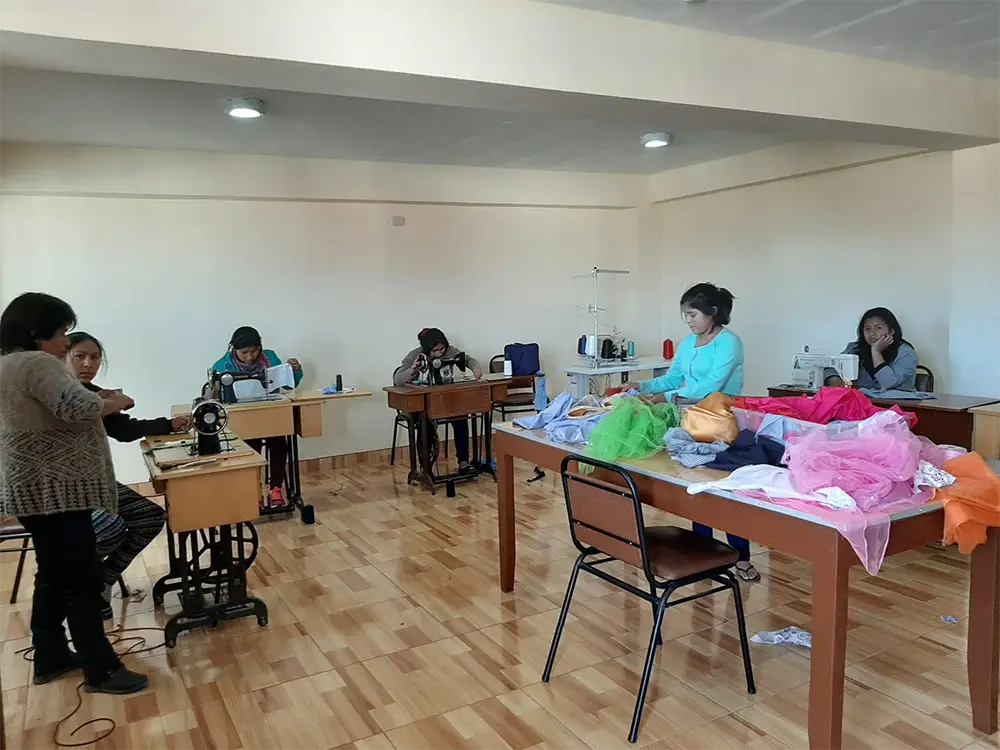
- Participation in productive training activities in which the adolescent mother integrates into activities that develop her production and entrepreneurial skills.
- Empowerment geared towards leaving the home, where the adolescent mother's skills for leaving, autonomy, and reintegration are developed, rediscovering her social and, if applicable, family networks (the Home will evaluate whether or not to recommend family contact and, as far as possible, will accompany the family during visits) and will inform the adolescent mother of the conditions of her discharge.
Entry Requirements
- Be a female between the ages of 12 and 17 (adolescent).
- Be referred at the request of public sector institutions, such as: Family, Mixed, or Criminal Courts or Prosecutor's Offices; the Directorate of Guardianship Investigations, the Special Protection Unit (UPE), and the Women's Emergency Center (CEM).
- Be pregnant, breastfeeding, or have minor children, and be in a vulnerable situation due to risk to their physical safety and that of their minor child, moral and material abandonment, being a victim of sexual assault, family neglect, orphanhood, among other reasons.
Conditions for Stay
A) Time
The stay of the adolescent mother and her minor child should not exceed the age of majority (18 years), except in exceptional circumstances, taking into account the following criteria:
- The adolescent mother expresses her desire to remain.
- The results of the evaluation by the Home's multidisciplinary team regarding the adolescent mother's needs, the changes and progress achieved in her socio-familial reintegration, level of education, empowerment, autonomy, and whether her family support network is still unsuitable.
B) Visits
In order to safeguard the physical, psychological, emotional, and social well-being of the adolescent mother, visits will be authorized by the referring agency. Family members must contact the Home to schedule a visit. Telephone calls will only be made in the company of staff (director, psychologist, or tutor) from the Home's telephone, on speakerphone, and at times agreed upon by the adolescent mother and the family member or relative.
C) Outings
Teenage mothers may only leave the home accompanied by staff, to start or continue with identification procedures, legal procedures or care related to their health, education and other relevant matters.
Discharge Conditions
- Reaching the age of majority, as established in Article 17, Chapter II of the Regulations of General Law No. 29174 for Residential Care Centers for Children and Adolescents.
- Death of the child.
- Necessary removal due to repeated serious violations by the adolescent mother of the Internal Regulations "Coexistence Agreements." The referring institution will be notified so that they may take the necessary measures.
- Attempted escape or disappearance of the adolescent mother.
- Discharge upon completion of the process (she is suitable for social reintegration, has support networks, etc.).
- Transfer; when the safety of the adolescent mother is at risk, the transfer will be arranged after prior coordination with the referring institution. It should be mentioned that, for the discharge of the teenage mother, the institution that referred the case will be officially notified in order to make known the reason and take the measures they deem appropriate.
Approaches to Care
These are those indicated by the Ministry of Women and Vulnerable Populations (MIMP):
- Human Rights Approach: This involves promoting and protecting women's rights, identifying rights that have been violated or not fulfilled, as well as the social, economic, cultural, and institutional barriers that limit their exercise.
- Gender Approach: This stems from the asymmetrical recognition of men and women based on sexual and gender differences, which generate violence against women. This approach allows for regulating equality of rights, eradicating all types of gender-based violence, and ensuring access to education, health, civic participation, among other aspects.
- Comprehensive approach: The origin of violence is multi-causal and sectoral, present at the personal, family, social, and structural levels, justifying intervention at different levels and sectors represented by the institutions created for these functions.
- Intercultural approach: This implies respect for the cultural expressions of multiculturalism in our country, except for those that promote discriminatory cultural practices against women, tolerate violence, or hinder the enjoyment of equal rights.